Food & collective life, 1801–1915 · Exhibition edition 1.0
Bread,
Work &
Power.
Who paid for the meal?
Who had the power to decide?
Explore how food shaped work, money and women’s public lives in the nineteenth and early twentieth centuries. Recipes, household budgets, letters and campaign cookbooks reveal the people and resources behind the meal.
How to explore: Scroll to the floating catalogue below. Use its arrows or swipe to browse, then choose “Open the chapter”. Explore in any order. Source notes explain the evidence; the Reading room brings the references together.
Begin with a household budgetA shop’s rules could reach well beyond its counter.Admission. Voting. Capital. Education.
Companion exhibition
A Household in Recipes
Open three historical recipes to explore their ingredients, prices, equipment and domestic labour. This companion exhibition takes a closer look at the material details behind the meal.
Explore A Household in RecipesChoose a reading path
The meal is only
the beginning.
Who could
afford to cook?
Open the equipment, heat and work behind three nineteenth-century recipes. Discover what the printed prices cannot establish.
The kitchen inventoryContinue into a recorded household: bread, letters & the editor’s scissors →
IIWhat does
enough cost?
Read Rowntree’s calculated minimum for a household in York. Change the family size and examine the assumptions.
The household ledger IIIWhen sources
disagree.
Place a catalogue summary beside a historical account and a dated rule book. Decide what each can establish.
The evidence room IVBefore the food
reached the table.
Explore women’s reported earnings in four food manufacturing groups in 1906. Compare an average with the distribution behind it.
Food & paid work VA cookbook on
the campaign table.
Follow three named contributions into the American suffrage movement, alongside advertisements, event receipts and cookbook accounts.
Boston, 1886 & 1890 VIThe Cookbook
in Public.
Explore personal canvassing, club discussions, fair booths and a recorded convention dinner.
Washington, 1909–1910 VIIRead with
the record.
Cookery manuals, testimony and institutional texts, with exact editions, page references and limits.
The reading room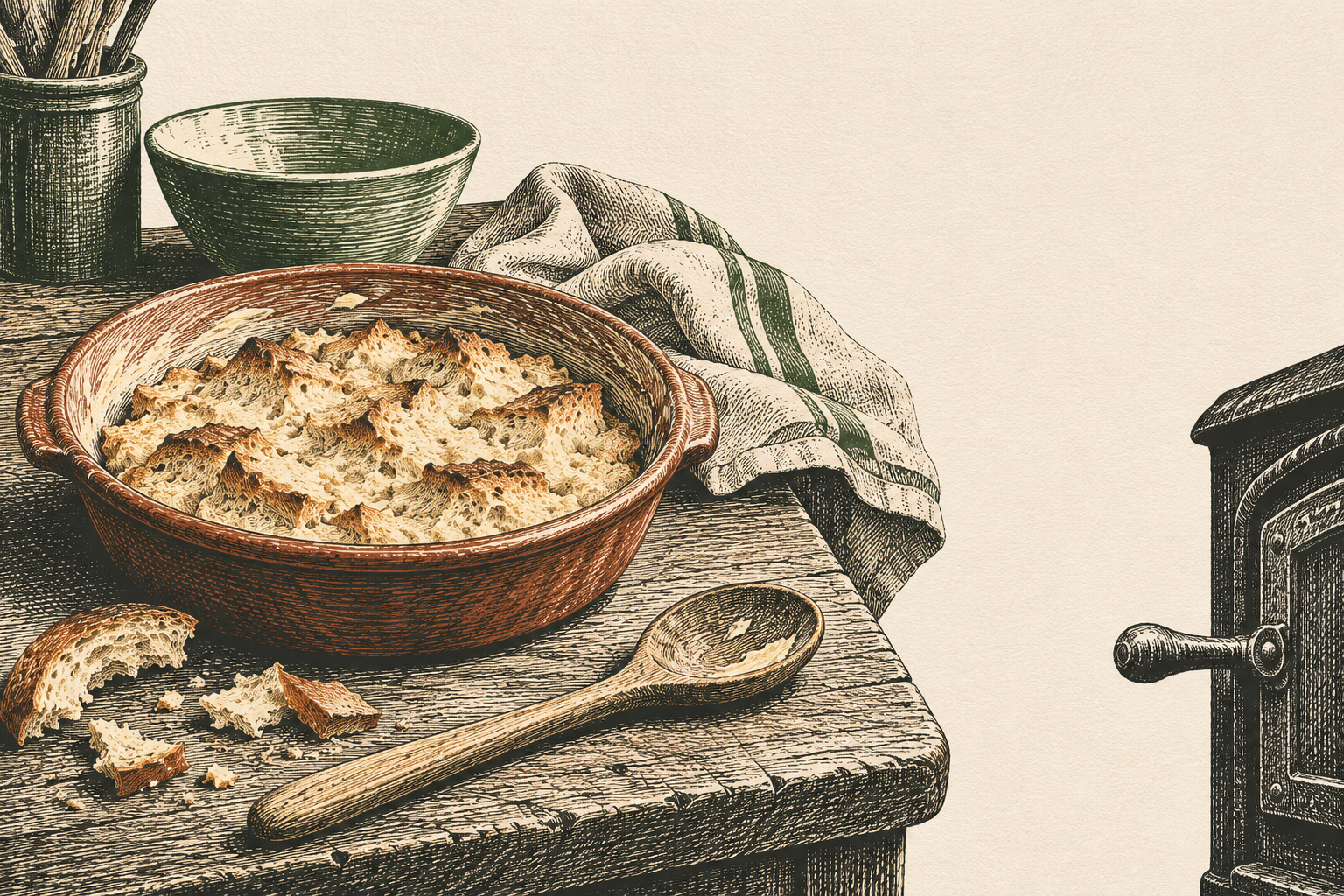
The things a recipe needs.
Read a dish through its equipment, heat and work.
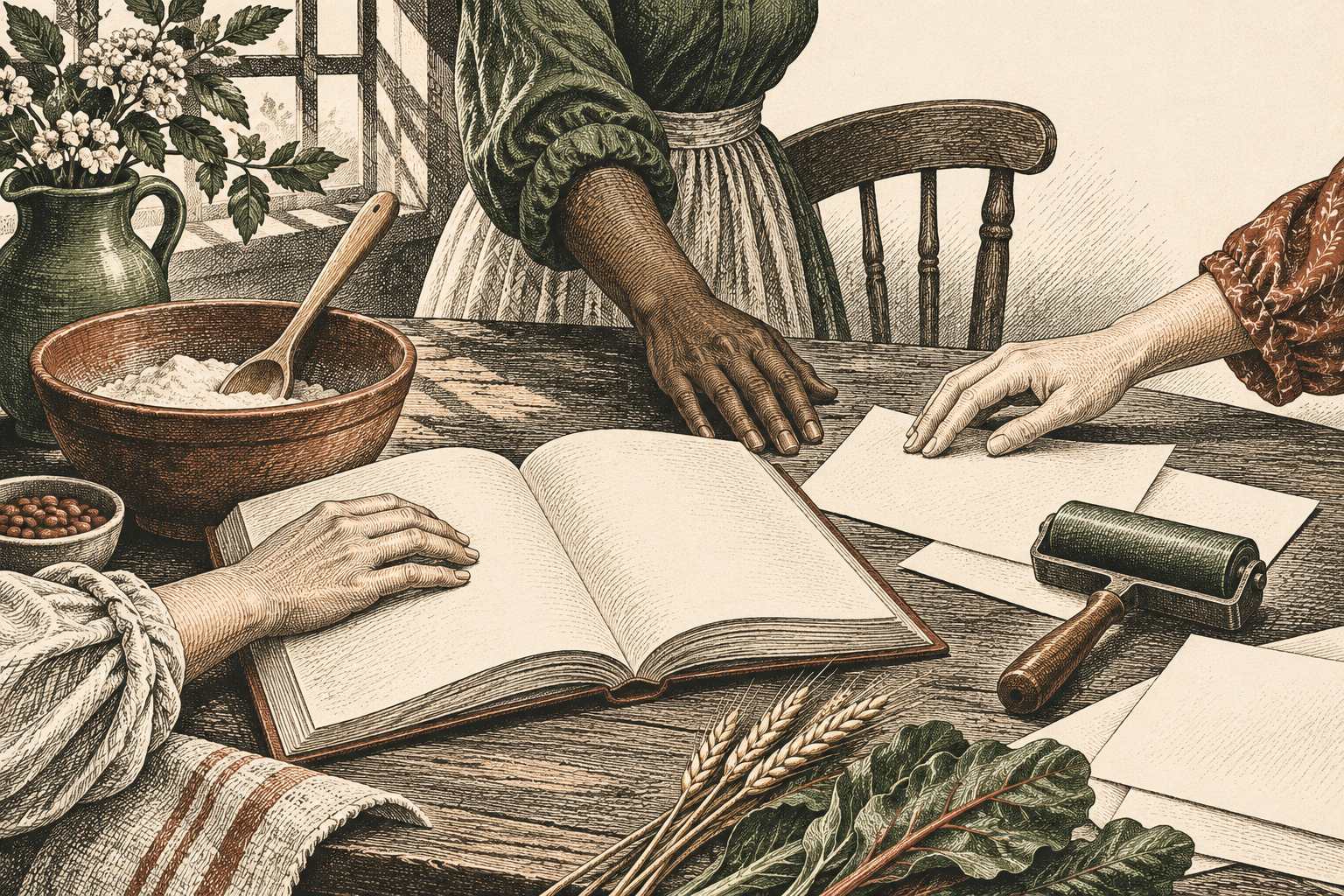
Who gets a place at the table?
Follow a cookbook into questions of public authority and unpaid duty.
Exhibition edition 1.0 · 6 November 2026. Sources, interpretations and evidence limits accompany each chapter. Read the evidence audit and remaining limits.
A detail worth following
1877Rochdale
Rule 5a, page 6
The price
of entry.
2s 3d
One shilling towards shares. One shilling as an entrance fee. Threepence for a copy of the rules.
These specified initial payments total 2s 3d. Taking out at least five shares was a separate obligation. This sum is not their full paid-up value, and it does not establish who could afford to join.
Read the conditions of membershipThe evidence register
Follow a question
to its source.
Choose a subject to explore documented passages, interpretations and the limits of each source.
The exhibition’s interpretation
Food as
social provision.
Money.
Work.
Authority.
In these selected cases, food provision and care offer grounds for claims about resources and authority. Their political direction and practical effects vary with the people and institutions involved.
This interpretation brings together distinct people, institutions and dates. The exhibition distinguishes documented connections from interpretations and unanswered questions.
Marilyn Power’s social provisioning framework (2004, pp. 3–19) provides a modern analytical lens for including unpaid work and power in economic inquiry. The historical connections presented here rest on the cited documents.
How the exhibition reads its sources
- Each claim identifies its edition and passage.
- Advice, recollection, transactions, estimates and proposals are distinguished.
- Comparisons retain their place, date, household and units.
- Counterexamples and the limits of representation remain visible.
- Corrections are documented alongside the source records.
No single “Victorian woman”, no automatic class assigned to a dish, no investment route inferred from an ingredient alone.
Sources & further reading
The reading room.
Each record says what has been inspected: a passage, page image, abstract or catalogue entry. A recommended book is not a claim that it has been read in full.
Archive access: Hull History Centre’s Guild guide. Catalogue references identify the holding collections; supplied dates are distinguished from printed dates.
Across the exhibition
Six ways to read
the table.
Food connects material resources, household work and public authority. Each chapter follows a particular place, period and kind of evidence.
- 01
Objects & access
Recipe instructions reveal the equipment, heat and skills behind a printed price.
Explore the kitchen inventory → - 02
Household necessities
Rowntree’s York budget defines a minimum through food, rent, clothing, fuel and sundries.
Open the household ledger → - 03
Collective resources
Rochdale’s rules and co-operative teaching texts distinguish membership, capital and the distribution of surplus.
Read the membership debate → - 04
Work & earnings
Reported industrial earnings show food production through the women employed in it.
Compare the earnings distributions → - 05
Print & political claims
Named contributions, advertisements and financial reports place cookbooks within American suffrage organising.
Read the campaign cookbook → - 06
Food in public
Canvassing, meetings, booths and collective hospitality bring everyday provision into organised activity.
Explore four social settings →
New source findings / 5 November 2026
More than
an unanswered question.
Explore the newly inspected evidence: political publication prices, reported event receipts and corrected cookbook accounts · Eaton’s original reports, accounting responsibilities, Guild funding, fuel and sundries, food taxation, official earnings statistics, and the illustrated pie mould.
Every finding identifies its source, inspection record, interpretation and scope. Download the research update.
Food & social activity / a separate Washington case
The Cookbook
in Public.
Follow four documented or reported settings: personal canvassing, club discussions, fair booths and collective hospitality.